

If you’re looking to elevate your performance on the ice, you need more than raw talent—you need the right strategy. This article is built for players and coaches who want clear, practical insights into modern hockey tactics, smarter training methods, and proven athletic recovery protocols that actually translate into game-day results. From refining stick handling under pressure to optimizing conditioning between shifts, we break down what works and why it works.
We’ve analyzed current pro-level trends, consulted established sports science research, and studied real in-game scenarios to ensure the guidance here reflects how the game is truly played today. Whether you’re preparing for a competitive season or sharpening specific skills, you’ll find actionable takeaways designed to improve consistency, resilience, and on-ice decision-making. This guide connects preparation, performance, and recovery into one cohesive plan—so you can compete harder, recover smarter, and stay ahead of the play.
Build a Smarter Post-Game Reset
You trained hard. But performance gains happen during recovery, not exertion. Research shows sleep and nutrition directly impact muscle protein synthesis and injury risk (Journal of Applied Physiology, 2018).
Start with a 10-minute cooldown to lower heart rate and flush metabolites. Rehydrate with electrolytes, then eat 20–40g protein within an hour (International Society of Sports Nutrition).
Next, prioritize mobility work and light foam rolling to maintain range of motion. Consistency beats intensity here.
Finally, protect 7–9 hours of sleep. These athletic recovery protocols prevent plateaus and prepare you for next puck drop for tomorrow’s battles.
The First 60 Minutes: The Golden Window for Recovery
The first hour after training isn’t just downtime—it’s a decision point. Do you recover like a pro, or just hope soreness fades?
Priority 1: The Active Cool-Down
Option A: Stop abruptly and head to the locker room.
Option B: Spend 10–15 minutes light jogging or easy cycling.
Option B wins. Low-intensity movement helps “flush” metabolic waste (byproducts like lactate created during intense effort) and gradually lowers heart rate. Research shows active recovery improves circulation and reduces next-day stiffness compared to complete rest (American Council on Exercise). It’s a cornerstone of athletic recovery protocols for a reason.
Priority 2: Immediate Rehydration
Water vs. electrolyte drinks?
– Water is essential for all sessions.
After heavy sweat loss, electrolytes (minerals like sodium and potassium that regulate muscle and nerve function) restore balance faster than water alone (National Athletic Trainers’ Association).
Priority 3: The 4:1 Carb-to-Protein Ratio
Carbs replenish glycogen (stored muscle fuel). Protein triggers muscle repair through protein synthesis. A 4:1 ratio jumpstarts both (International Society of Sports Nutrition).
Simple wins: chocolate milk, a fruit smoothie with protein powder, or Greek yogurt with a banana. Think of it as refueling the engine before the next shift.
Fueling the Repair Process: Your 24-Hour Nutrition Strategy
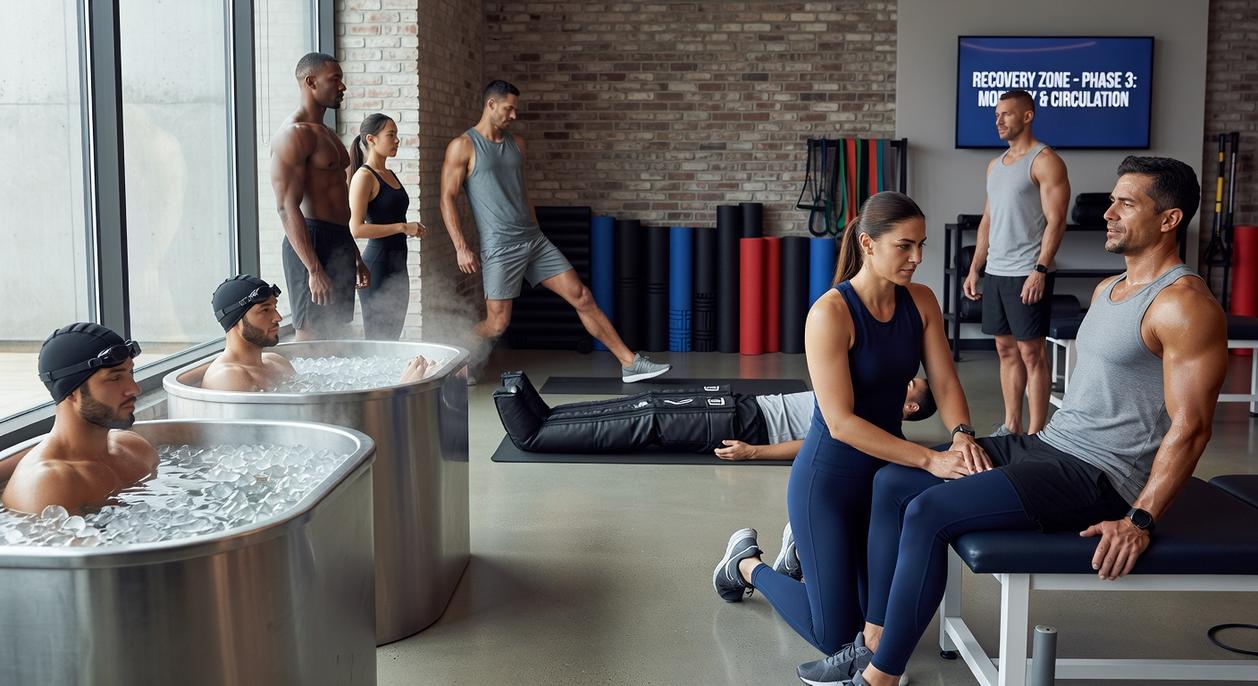
Training breaks muscle tissue down. Recovery builds it back stronger. The next 24 hours are where real progress happens (yes, even more than the final rep).
Protein for Rebuilding
Aim for 0.25–0.4 grams of protein per kilogram of bodyweight within two hours post-workout, then continue spreading intake evenly every 3–4 hours (International Society of Sports Nutrition, 2017). For most athletes, that totals 1.6–2.2 g/kg per day for optimal muscle repair.
Choose high-quality, complete proteins: lean chicken, fish, eggs, Greek yogurt, or whey protein. Whey is especially effective post-training due to its rapid absorption and high leucine content (a key amino acid that triggers muscle protein synthesis).
Recommendation: Don’t “save” protein for dinner. Distribute it consistently.
Carbohydrates for Refueling
Muscle glycogen (stored carbohydrate in muscle) powers high-intensity performance. After hard sessions, replenish with complex carbohydrates like oats, sweet potatoes, and brown rice. Research shows combining carbs with protein accelerates glycogen restoration (JISSN, 2018).
If you train again within 24 hours, prioritize carbs at most meals. Think of it as refilling your tank before the next shift.
Harnessing Anti-Inflammatory Foods
Inflammation is a natural repair signal—but excessive inflammation delays recovery. Use nutrition strategically.
Add tart cherries, berries, salmon (rich in omega-3s), and leafy greens. These antioxidant-dense foods help manage oxidative stress without blunting adaptation.
This is where athletic recovery protocols and smart food choices overlap.
Sustained Hydration
Rehydration isn’t one-and-done. A simple formula: 0.5–0.7 ounces of water per pound of bodyweight daily, plus 16–24 ounces per pound lost during exercise.
Hydrate steadily. Not just when you’re thirsty.
For a structured approach, pair nutrition with periodization training for peak season performance to maximize results over the season.
Advanced Recovery Modalities: Techniques for a Competitive Edge
Soft Tissue and Myofascial Release
Foam rolling, massage guns, and professional sports massage target fascia—connective tissue surrounding muscles. When you roll slowly over tight quads for 60–90 seconds, you stimulate blood flow and reduce delayed onset muscle soreness (DOMS), which typically peaks 24–72 hours post-workout (Cheatham et al., 2015). For example, after a heavy leg session, spend five minutes per muscle group, breathing steadily. (Yes, it hurts a little.) Pro tip: pause on tender spots until discomfort drops by half.
Contrast and Temperature Therapy
Immediately after intense play, use cold immersion 10–15 minutes at 10–15°C to limit acute inflammation and swelling. However, on subsequent days, shift to heat—saunas or hot packs for 15–20 minutes—to increase circulation and relax stiffness. Research shows heat can improve tissue extensibility before mobility work (Petrofsky et al., 2013).
Active Recovery Sessions
Instead of complete rest, try 20–30 minutes of low-intensity swimming, yoga, or light cycling. This keeps heart rate around 50–60% of max, promoting nutrient-rich blood flow and metabolic waste removal. A practical example: the day after overtime, bike easily for 25 minutes, then stretch. Many athletic recovery protocols favor this approach over total inactivity.
Compression Garments
Finally, compression socks and tights apply graduated pressure, potentially enhancing venous return and reducing muscle oscillation during movement. Some athletes report decreased perceived soreness (Hill et al., 2014). Wear them for several hours post-training to test individual response. Track results weekly to see what truly works best for your body.
The Ultimate Recovery Tool: Optimizing Your Sleep
Deep sleep is your real off-ice training session. During slow-wave sleep, the body releases Human Growth Hormone (HGH)—the key driver of tissue repair and muscle growth (NIH). Skip it, and progress stalls. Some argue supplements or extra lifts matter more. They help, but without sleep, athletic recovery protocols fall apart (like sharpening skates, then never stepping on the ice).
Sleep Hygiene Checklist
| Factor | Standard | Competitive Edge |
|---|---|---|
| Temperature | 60–67°F |
Pre-cool sheets |
| Light | Dark room | Blackout curtains |
| Routine | Fixed bedtime | 30-min wind-down |
Avoid screens 60 minutes before bed (Harvard Health). Pro tip: track REM weekly.
Recovery only works when it’s systematic. At its core, a winning approach rests on three pillars: immediate post-exercise actions, strategic nutrition, and restorative practices like sleep. Miss one and the whole structure wobbles. I’ve seen athletes train relentlessly, yet stall because they ignored recovery; in my opinion, that’s the fastest way to invite injury and sabotage progress.
So where do you go from here? Start small and be consistent. Turn smart athletic recovery protocols into automatic habits, not afterthoughts. Choose one technique from this guide and commit to it daily for two weeks. Then notice difference in performance and resilience.
Take Control of Your Performance and Recovery
You came here to sharpen your edge — to understand how pro-level tactics, smarter training, and disciplined preparation translate into real results on the ice. Now you have a clearer blueprint for elevating your game, tightening your stick handling, and approaching game day with confidence.
But knowing what to do is only half the battle.
Fatigue, slow recovery, and inconsistent performance are what separate good players from dominant ones. Ignoring proper athletic recovery protocols doesn’t just stall progress — it increases injury risk and limits your ability to compete at full speed when it matters most.
The next step is simple: commit to structured recovery, refine your technical habits daily, and follow proven training insights trusted by serious hockey players. Dive deeper into our expert breakdowns, apply the drills consistently, and build a recovery plan that supports peak output every shift.
If you’re ready to skate faster, recover smarter, and perform at a higher level, start implementing these strategies today and explore our advanced hockey performance guides now. Your next leap forward starts with what you do after this read.
 William B. has opinions about hot topics in pro sports. Informed ones, backed by real experience — but opinions nonetheless, and they doesn't try to disguise them as neutral observation. They thinks a lot of what gets written about Hot Topics in Pro Sports, Pro Guides, Athlete Fitness and Endurance is either too cautious to be useful or too confident to be credible, and they's work tends to sit deliberately in the space between those two failure modes.
Reading William's pieces, you get the sense of someone who has thought about this stuff seriously and arrived at actual conclusions — not just collected a range of perspectives and declined to pick one. That can be uncomfortable when they lands on something you disagree with. It's also why the writing is worth engaging with. William isn't interested in telling people what they want to hear. They is interested in telling them what they actually thinks, with enough reasoning behind it that you can push back if you want to. That kind of intellectual honesty is rarer than it should be.
What William is best at is the moment when a familiar topic reveals something unexpected — when the conventional wisdom turns out to be slightly off, or when a small shift in framing changes everything. They finds those moments consistently, which is why they's work tends to generate real discussion rather than just passive agreement.
William B. has opinions about hot topics in pro sports. Informed ones, backed by real experience — but opinions nonetheless, and they doesn't try to disguise them as neutral observation. They thinks a lot of what gets written about Hot Topics in Pro Sports, Pro Guides, Athlete Fitness and Endurance is either too cautious to be useful or too confident to be credible, and they's work tends to sit deliberately in the space between those two failure modes.
Reading William's pieces, you get the sense of someone who has thought about this stuff seriously and arrived at actual conclusions — not just collected a range of perspectives and declined to pick one. That can be uncomfortable when they lands on something you disagree with. It's also why the writing is worth engaging with. William isn't interested in telling people what they want to hear. They is interested in telling them what they actually thinks, with enough reasoning behind it that you can push back if you want to. That kind of intellectual honesty is rarer than it should be.
What William is best at is the moment when a familiar topic reveals something unexpected — when the conventional wisdom turns out to be slightly off, or when a small shift in framing changes everything. They finds those moments consistently, which is why they's work tends to generate real discussion rather than just passive agreement.