
I’ve been analyzing hockey for years and I can tell you this: most fans are watching the wrong numbers.
You’re probably still checking goals and assists to figure out who’s playing well. Maybe you glance at plus-minus. But those stats lie more often than they tell the truth.
Here’s the reality: the numbers you see on ESPN or NHL.com don’t show you what’s actually happening on the ice. They miss the plays that win games.
I spent years learning how pro scouts and front offices actually evaluate players. The gap between what casual fans track and what teams use to make million-dollar decisions is massive.
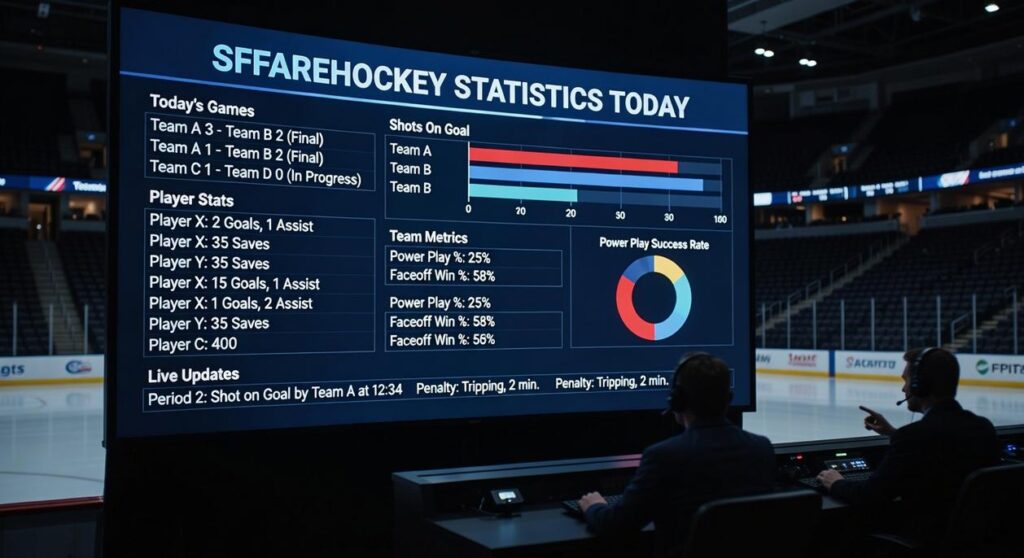
This guide breaks down the sffarehockey statistics today that matter. I’m talking about Corsi, Expected Goals, and the metrics that reveal a player’s real impact.
We analyze pro sports trends and tactical patterns the same way NHL teams do. That means you’re getting the framework that separates surface-level takes from genuine understanding.
You’ll learn what these advanced stats actually measure and how to use them when you’re watching games. No math degree required.
By the end, you’ll see hockey differently. You’ll spot the players driving play before the goals show up on the scoresheet.
The Foundation of Modern Analysis: Puck Possession Metrics
You’ve probably heard someone praise a player’s plus-minus rating.
Maybe you’ve even used it yourself to judge who’s playing well.
Here’s the problem. Plus-minus is basically useless.
I know that sounds harsh. But when a stat depends more on your goalie’s save percentage than your actual play, something’s broken. A defenseman can get torched all night but finish with a +2 because his goalie stood on his head. Meanwhile, a forward can dominate possession and finish -1 because of bad puck luck.
That’s where possession metrics come in.
Instead of relying on goals (which are random and goalie-dependent), we can look at who actually controls the puck. Who’s driving play. Who’s spending time in the offensive zone versus getting pinned in their own end.
Corsi (CF%) is your starting point.
It measures all shot attempts for versus against while a player is on ice at 5v5. Shots on goal, missed shots, blocked shots. Everything. The formula is simple: your team’s shot attempts divided by total shot attempts when you’re playing.
Think of it as territorial control. If your team is firing 60 shot attempts while giving up 40, you’re controlling the game. The puck is in the offensive zone. You’re creating chances.
Fenwick (FF%) takes a different approach.
It’s the same concept as Corsi but removes blocked shots from the equation. Why? Because blocked shots never had a chance to become goals. Fenwick focuses on attempts that actually reached the net or went wide.
Some analysts prefer Fenwick because it predicts future scoring better. A shot that gets blocked in the neutral zone isn’t the same as one that forces a save. According to Sffarehockey statistics today, teams with higher Fenwick percentages tend to score more over the long run because they’re generating quality attempts.
So which one should you use?
Honestly, both tell you something useful. Corsi gives you the full picture of possession and pressure. Fenwick zeroes in on dangerous attempts. I usually check both when I’m evaluating a player or line.
Here’s your benchmark. Anything above 50% means you’re winning the possession battle. Below 50% means you’re getting outplayed. A player sitting at 55% CF is spending way more time in the offensive zone than their own end. Someone at 45% is getting hemmed in.
It’s not perfect. No single stat is. But compared to plus-minus? It’s night and day.
You’re measuring what a player actually does on the ice instead of hoping their goalie bails them out.
Quality Over Quantity: Understanding Expected Goals (xG)
Not all shots are created equal.
You already know this if you’ve watched hockey for more than five minutes. A wrist shot from the blue line through traffic? That’s barely a threat. But a rebound attempt from two feet out? That’s a goal waiting to happen. In the world of Sffarehockey, where precision and timing reign supreme, it’s the quick rebounds and close-range shots that truly define a player’s skill and can turn the tide of the game in an instant. In the world of Sffarehockey, where precision and timing reign supreme, it’s crucial to capitalize on every scoring opportunity, transforming split-second reactions into game-changing plays.
Here’s where most fans get it wrong though.
They look at shot totals and think they understand the game. Team A had 35 shots and Team B had 20, so Team A dominated. Right?
Wrong.
I’ve seen teams lose games where they “dominated” the shot count because half their attempts came from the perimeter. Meanwhile, the other team got five clean looks from the slot and buried three of them.
This is where Expected Goals (xG) comes in.
xG models assign a probability to every unblocked shot based on historical data. They consider shot type, distance, angle, and situation. Was it a rebound? A rush chance? A one-timer from the circle?
The model looks at thousands of similar shots and tells you what percentage of those typically go in.
Some analysts hate this stuff. They say it removes the human element from hockey. That you can’t reduce the game to numbers.
But here’s my take. xG doesn’t replace what you see with your eyes. It sharpens it.
I use xG to spot players who are getting unlucky. High xG but low actual goals? That player is creating quality chances. The puck just isn’t bouncing their way yet. On the flip side, low xG with high goals? That’s either elite finishing or regression waiting to happen.
You can check sffarehockey statistics yesterday to see these patterns play out in real time.
High-Danger Chances (HDC) take this further. Instead of looking at all shots, HDC isolates attempts from the slot. The home plate area where most goals actually happen.
When I’m evaluating a game, I care way more about HDC than total shots. It cuts through the noise and shows you which team actually controlled the dangerous ice.
Evaluating Individual Skill: Player-Specific Metrics

You’ve probably heard analysts throw around terms like zone entries and GSAx.
But what do they actually mean?
Here’s the thing. Traditional stats like goals and assists only tell part of the story. If you want to really understand who’s driving play, you need to look deeper.
Let me break down the metrics that actually matter.
Zone Entries & Exits
This one’s simple but powerful.
Every time a player crosses the blue line with the puck, we track it. Did they carry it in themselves? Did they pass it to a teammate who entered the zone cleanly? Or did they just dump it in and hope for the best?
The difference is huge (and most casual fans never notice it).
A defenseman who can exit the zone cleanly under pressure is worth his weight in gold. Same goes for forwards who can carry the puck into the offensive zone instead of relying on dump and chase.
When you watch sffarehockey statistics 2022 breakdowns, you’ll see why teams pay premium money for players who excel at this.
Goals Saved Above Expected (GSAx)
Now we’re talking about goalie evaluation. For additional context, Statistics 2023 Sffarehockey covers the related groundwork.
GSAx measures how many goals a goalie saved compared to what an average goalie would save facing the same shots. It accounts for shot quality, location, and type.
Say a goalie faces a breakaway. The average NHL goalie stops that shot 70% of the time. If your goalie stops it, he’s performing as expected. If he stops ten of those when he should only stop seven? That’s +3 GSAx. When analyzing a goalie’s performance, understanding metrics like GSAx in conjunction with Sffarehockey Statistics 2022 can provide valuable insights into their effectiveness during high-pressure situations, such as facing breakaways. When evaluating a goalie’s performance, incorporating advanced metrics like GSAx alongside Sffarehockey Statistics 2022 provides a more comprehensive view of their effectiveness in crucial game situations.
It’s the most accurate way we have to measure goaltending right now.
PDO: The ‘Luck’ Statistic
This one sounds complicated but it’s not.
PDO is just your team’s shooting percentage plus save percentage while you’re on the ice. The league average always hovers around 1000 (or 100.0 depending on how it’s displayed).
Got a PDO of 1050? You’re probably getting lucky and due for a regression. Sitting at 950? Things should improve.
Some people say PDO is meaningless because skill matters more than luck. And sure, elite players can sustain slightly higher numbers. But when you see someone running a 1080 PDO through twenty games?
That’s not sustainable. The numbers always come back to earth.
Putting It All Together: A Practical Analysis Checklist
You’ve got the concepts down.
Now let’s talk about how I actually use them when I’m breaking down a game.
Most people look at the final score and call it a day. But that tells you almost nothing about what really happened on the ice.
I know some analysts say you should just trust your eyes. Watch the game and you’ll know who played better. And sure, there’s value in that. Your gut reaction matters.
But here’s where that falls short.
Your eyes lie to you all the time. You remember the big hits and the highlight reel saves. You forget the quiet two minutes where one team controlled the neutral zone and slowly tilted the ice.
That’s why I use a checklist. Same order, every time.
Step 1: Start with Possession (CF%)
I check which team controlled the flow first. If one team is sitting at 58% Corsi, they’re driving play. Simple as that.
This tells me who had the puck more and who was stuck defending.
Step 2: Layer on Quality (xGF%)
Possession means nothing if you’re just firing shots from the blue line. So next, I look at who generated the better chances.
A team with 45% possession but 52% expected goals? They’re getting quality looks when they do have the puck. We explore this concept further in Sffarehockey Results Yesterday.
Step 3: Assess Finishing and Goaltending
Now compare actual goals to expected goals. This is where you see which goalie stood on their head or which shooter got hot.
If a team scored four goals on 2.1 expected goals, someone’s shooting percentage is way above normal. That probably won’t last.
Step 4: Context is Key
Here’s what trips people up.
You can’t just look at the numbers in a vacuum. A team protecting a two goal lead in the third period will have worse possession stats. That doesn’t mean they played poorly (it just means they sat back).
Check the score effects. Look at who they played against. See how special teams performed.
I use sffarehockey statistics to track these patterns over time. One game tells you something. Ten games tell you a lot more.
When you run through this checklist, you start seeing games differently. You stop getting fooled by fluky results and start identifying which teams are actually playing well. By applying the insights from this checklist, you can enhance your understanding of team dynamics in Sffarehockey, allowing you to discern genuine performance from mere luck. By applying the insights from this checklist, you can enhance your understanding of team dynamics in Sffarehockey, allowing you to make more informed predictions and appreciate the nuances of the game.
Try it next game you watch. Pull up the stats and walk through each step.
You’ll be surprised how often the “worse” team actually deserved to win.
A Smarter Way to Watch the Game
You now understand the stats that actually matter.
Corsi shows you possession. xG reveals shot quality. GSAx tells you if a goalie is stealing games or getting bailed out by his team.
I get it. You were tired of hearing about plus-minus and basic shot totals that miss half the story. Those numbers don’t tell you why a team won or what’s coming next.
These three metrics work because they measure what drives results. Possession creates opportunities. Shot quality predicts scoring. Performance versus expectation separates luck from skill.
You can see the game differently now.
Start using these stats during your next game day prep. Watch how they reveal patterns that box scores hide. You’ll spot undervalued players and see through hot streaks that won’t last.
Sffarehockey statistics today give you the tools to analyze hockey the way front offices do. The numbers are there. You just need to know which ones to watch.
Your next game will look different. You’ll see what’s really happening on the ice. Sffarehockey.
 There is a specific skill involved in explaining something clearly — one that is completely separate from actually knowing the subject. Tony S. has both. They has spent years working with stick handling mastery in a hands-on capacity, and an equal amount of time figuring out how to translate that experience into writing that people with different backgrounds can actually absorb and use.
Tony tends to approach complex subjects — Stick Handling Mastery, Pro Guides, Game Day Preparation Tips being good examples — by starting with what the reader already knows, then building outward from there rather than dropping them in the deep end. It sounds like a small thing. In practice it makes a significant difference in whether someone finishes the article or abandons it halfway through. They is also good at knowing when to stop — a surprisingly underrated skill. Some writers bury useful information under so many caveats and qualifications that the point disappears. Tony knows where the point is and gets there without too many detours.
The practical effect of all this is that people who read Tony's work tend to come away actually capable of doing something with it. Not just vaguely informed — actually capable. For a writer working in stick handling mastery, that is probably the best possible outcome, and it's the standard Tony holds they's own work to.
There is a specific skill involved in explaining something clearly — one that is completely separate from actually knowing the subject. Tony S. has both. They has spent years working with stick handling mastery in a hands-on capacity, and an equal amount of time figuring out how to translate that experience into writing that people with different backgrounds can actually absorb and use.
Tony tends to approach complex subjects — Stick Handling Mastery, Pro Guides, Game Day Preparation Tips being good examples — by starting with what the reader already knows, then building outward from there rather than dropping them in the deep end. It sounds like a small thing. In practice it makes a significant difference in whether someone finishes the article or abandons it halfway through. They is also good at knowing when to stop — a surprisingly underrated skill. Some writers bury useful information under so many caveats and qualifications that the point disappears. Tony knows where the point is and gets there without too many detours.
The practical effect of all this is that people who read Tony's work tend to come away actually capable of doing something with it. Not just vaguely informed — actually capable. For a writer working in stick handling mastery, that is probably the best possible outcome, and it's the standard Tony holds they's own work to.