Most training programs focus on reps and routines. Elite athletes focus on results. If you’ve hit a plateau—stronger, but not faster; bigger, but not more explosive—it’s time to rethink your approach. This guide moves beyond generic gym advice and shows you how to train like a pro athlete using performance-driven methods built for real-world power, speed, and endurance. Drawing from proven professional training principles, you’ll learn how to upgrade your current routine with targeted strategies that translate directly to measurable gains. The goal isn’t just to work harder—it’s to perform better when it matters most.
Train for Power: The Secrets to Explosive Strength
Back in 2019, several NHL performance labs began separating static strength from dynamic power in testing protocols. Static strength is your ability to lift something heavy once (think a max squat). Dynamic power, however, is how fast you can move a load. And in hockey—or any explosive sport—that speed is everything.
Some argue that simply getting stronger is enough. After all, heavier squats should mean harder strides, right? Not exactly. Without velocity, strength is like a sports car stuck in first gear.
Core Technique: Plyometrics
The key is the stretch-shortening cycle—a rapid muscle stretch followed by an immediate contraction. Imagine pulling back a slingshot before release. Plyometrics train this reflex. Start with jump squats, lateral bounds, and pogo hops.
Pro-Level Progression
After three months of foundational work, progress to box jumps, broad jumps, and medicine ball slams. Perform 3 sets of 5–8 reps, resting fully between sets. Focus on soft landings, knees aligned, chest tall. Quality beats quantity (always).
Integration Tip
Before lower-body lifts, add a 15-minute plyometric block to prime your nervous system. This helps you train like a pro athlete and generate more force in squats or deadlifts.
For performance context, reviewing understanding scouting reports and player evaluations shows why explosive metrics matter on the ice.
Build Unstoppable Stamina with Pro-Level Conditioning
The Flaw in Steady-State Cardio
Here’s a contrarian take: long, slow cardio isn’t the stamina builder most athletes think it is. Logging miles at a comfortable pace trains your aerobic system (how your body uses oxygen over time), but most high-intensity sports rely heavily on the anaerobic system—energy production without immediate oxygen. Hockey shifts, breakaways, and board battles don’t happen at jogging speed. Studies show repeated sprint ability depends more on anaerobic conditioning and recovery efficiency than steady-state endurance (Buchheit & Laursen, 2013). So if you’re coasting on the treadmill, you’re conditioning for a marathon—not overtime.
Core Technique – High-Intensity Interval Training (HIIT)
HIIT alternates short bursts of maximal effort with structured recovery. The magic is in the work-to-rest ratio:
- 1:1 builds resilience
- 1:2 sharpens repeat sprint power
- 1:3 maximizes output quality
Pro tip: Quality beats quantity. If intensity drops, the session’s over.
Pro-Level Application
Game-simulation protocol:
- 30 seconds all-out sprint (Assault bike or track)
- 60 seconds active recovery
- 8–10 rounds
This 1:2 ratio mirrors real shift demands.
Performance Benefit
HIIT improves VO2 max (your body’s oxygen ceiling) and raises lactate threshold—the point where fatigue floods in (Bassett & Howley, 2000). Translation: you can train like a pro athlete and sustain higher intensity longer—when it actually counts.
The Foundation of Force: Advanced Core Stability Drills

Let’s get this straight: your core isn’t about chasing a six-pack. It’s the body’s transmission system—the place where force transfers between lower and upper halves. If that system leaks energy, performance drops (and yes, that includes your shot power).
First, a definition. Anti-rotation means resisting unwanted twisting. Anti-extension means preventing the lower back from arching excessively. In my opinion, this is where most athletes go wrong. They chase crunch variations, but real performance is about controlling motion, not just creating it. Research from the National Strength and Conditioning Association supports this shift toward stability-based core training for power athletes (NSCA Journal).
So, what works?
- Pallof Press (anti-rotation): Stand tall, ribs down, press the cable straight out without letting your torso twist. If the weight spins you, it’s too heavy.
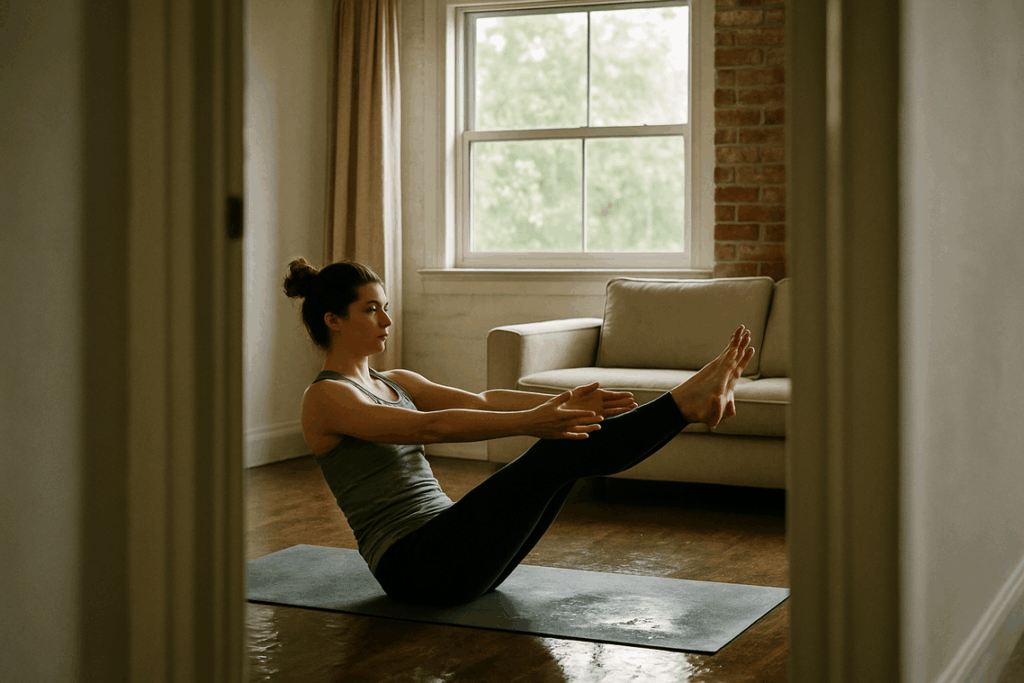
- Dead Bugs (anti-extension): Lower opposite arm and leg while keeping your lower back glued to the floor. Slow and controlled wins here.
- Farmer’s Carries (total stability): Walk with heavy dumbbells, shoulders packed, no leaning. Simple. Brutal. Effective.
Now, think about swinging a stick or changing direction under pressure. A stable core keeps force efficient and balance intact. If you want to train like a pro athlete, start by mastering what your spine shouldn’t do.
Recover Smarter, Not Harder: Elite Regeneration Tactics
Training breaks you down. Recovery builds you up. That’s not motivational fluff—it’s physiology. When you lift, sprint, or battle through drills, you create microtears in muscle fibers. Muscle protein synthesis (the process where your body repairs and strengthens tissue) happens afterward—not mid-workout. Some athletes argue more grind equals more gains. In reality, without structured recovery, you’re just accumulating fatigue (and flirting with injury).
First, consider active recovery—low-intensity movement on off days. Activities like walking, light cycling, or swimming increase blood flow, delivering oxygen and nutrients that reduce DOMS (delayed onset muscle soreness). Think of it as a system flush, not another workout. If you want to train like a pro athlete, your off-days should still be strategic.
Next, prioritize mobility and myofascial release. Foam rolling targets fascia (connective tissue surrounding muscles), improving range of motion and decreasing stiffness. Focus on hips, hamstrings, and the thoracic spine—key drivers of skating power and rotational strength. (Yes, your tight hips are probably limiting you.)
Finally, sleep 8+ hours. Research shows sleep regulates growth hormone and testosterone—critical for repair and central nervous system recovery (Walker, 2017). Some claim they can “catch up later.” Science disagrees.
Pro tip: Track sleep like you track reps. What gets measured improves.
Integrate These Techniques and Dominate Your Goals
You came here looking for a way to break through plateaus—and now you have the blueprint to do exactly that. The frustration of putting in the work without seeing real athletic gains is real. But the answer isn’t grinding harder. It’s learning to train like a pro athlete with intention and structure.
By combining explosive power drills, elite conditioning, functional core strength, and strategic recovery, you’re developing complete athleticism—not just surface-level fitness.
Now take action. Add a 15-minute plyometric warm-up to your routine this week and feel the difference. Commit, execute, and elevate your performance starting today.